Hello. I am Marcus Szeiman, once an Art teacher, then a journeyman aerospace mechanic, and now a STEM M.Ed. candidate at the American College of Education. I’ve come to accept that a life-less-ordinary is not a bad one. In fact, I’ve brought along with me skills and experiences that are diverse and exciting. I hope you find some connections to STEM, teaching strategies, and learning with technology through my eyes.
As I progress through my ACE experience, I have encountered an amazing amount of information on new educational practices, trends, and technology for 21st century learners. Initially, I imagined my future classroom as one where my current mechanical and electrical abilities would enable an engaging, integrated curriculum. While I still want to make smart, bio-remediating plants that live alongside us, I have discovered that the technology available today is what students will access and engage a highly connected variety of disciplines. Personal electronic devices allow instant experiences with learning that span history and the globe. Learners can visit places virtually while engaging the diversity of their own abilities through classroom management systems, tablets, digital tools, and social platforms.
This blog is designed to address the question of how 3D printing can benefit the classroom beyond its function as a tool of learning. My viewpoint is that it represents one of many tools for learning by engaging diverse learners and their learning styles. Additionally, I hope to provide ideas of how this technology can benefit teachers across the STEM disciplines and other subjects as well.
3D printing is a form of additive manufacturing, where the material is added in successive layers to build up a 3-dimensional form from various materials. Its history is mired in one of the more contentious processes of the American legal system, the intellectual property patent. In the 1980’s and 1990’s patents were processed to market the profitability of 3D printing and its subsequent processes. Access to printers became expensive and the technology stalled commercially until the patents expired. Since 2010 the 3D printing process has boomed with many contributions being supported by developers, educational institutions, and STEM fields. Open source software and hardware has enabled rapid advances in 3D printing to where it is now commercially viable as a product.
Currently there is support for 3D printing from schools, colleges, technology fields, and manufacturing. It spans STEM fields, such as math and engineering, to applications in aerospace, bio-engineering, and medicine. It is a process that is considered an emergent technology. For learners and teachers, this means an opportunity within the classroom to apply, prototype, and model formulas, equations, and structures in 3 dimensions to support class experiences. Technical literacies such as coding, computer aided design(CAD), and manufacturing technology are in demand for 21st century employment.
As a tool for learning, 3D printers can benefit every classroom. Diverse classroom populations, including often overlooked genders, races, and second language learners, can benefit from technology that encourages collaboration and communication of groups with different cultural worldviews. 3D printed objects bring an immediate and tangible resource to science, math, language, and art classes by providing examples for students to feel as well as see in three dimensions.
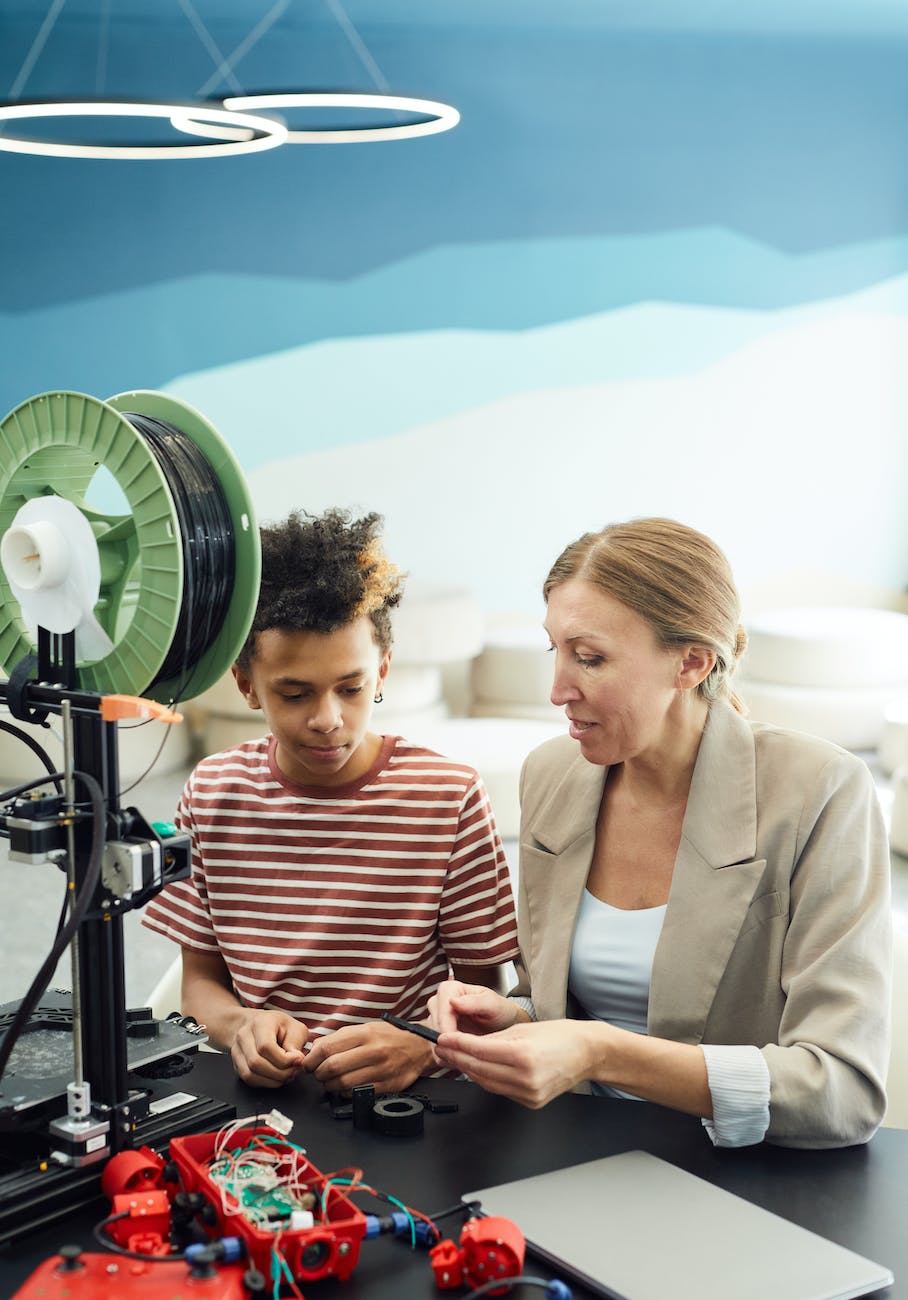
Today, a 3D printer is as easy to operate as any modern appliance. Mechanically reliable and intuitive, the code is generated by many software applications for a variety of ages and skill levels. Another hallmark of the 3D printing revolution in education is the vast network of learning communities that provide instruction, help, and libraries of pre-made CAD models for teachers and students to use. The excitement students have when watching a 3D printer work captures their attention and focus on STEM fields as attainable goals.
Tinkering sounds like it implies a limited value or effort. As an amateur might tinker with a car engine, never digging too deep into its operations or causing any irreparable harm. In Philip K. Dick’s 1953 science fiction story, The Variable Man, the protagonist is a tinker from 1913 transported into a technology driven future because he has repair skills that are obsolete (2013). While a future government wants him to fix a device devised to be an ultimate weapon, he instead fixes it in a way to lose the war but save humanity. Before mass production and disposable culture, a tinker was a valued profession. A person who could repair anything with limited materials and only the simplest objective, make it work. Tinkering in the classroom is valuable for students to work through problems by physically interacting with objects.
As a tool for learning, 3D printers and CAD software bring the novelty of tinkering to act as a powerful engagement tool. Described by Keune and Peppler, tinkering is grounded in Papert’s constructionism theory (2018). This theory suggests that learners construct mental models about the workings of the world around them by engaging and manipulating objects to think with. Mental models help students understand the world around them until they encounter a new model to replace their existing ideas. Papert suggests that through physical engagement learners can the abstract can become concrete with objects to think with (1993). With this understanding it is suggested that teachers can intensionally design environments and learning kits to facilitate this experience. The 3D printer is idea for this application. No matter the course content, physical objects can be made and supplied in such a way that students can come up with multiple solutions to an open-ended problem.
Research by Poce and De Medio suggest that tinkering is playful practice led by inquiry-based learning with creative and aesthetic components (2019). Use of the 3D printer to make new parts, creative designs, or repair parts expresses a competency in an emerging, as yet identified, Gardner-esque technical intelligence. Tinkering is most effective when students have ownership of the topic, the format of the presentation, and the creation of questions (Harris, 2017). Within the classroom, tinkering promotes social and collaborative learning (Poce and De Medio, 2019). While promoting 21st- century skills, learners can also participate in the aspects of rubric and assessment design as well.
Tinkering is learning through play. Whether it is used for exemplars, manipulatives, or models 3D printers have little constraint on what they can make, limited only by the imagination. The Variable Man treats technology as a cautionary tale but that dreamers and tinkerers may solve the future’s problems, today.
Dick, P. K. (2013). The variable man: Short Story. Harper Collins.
Keune, A., & Peppler, K. (2018). Materials-to-develop-with: The making of a makerspace. British Journal of Educational Technology, 50(1), 280–293. https://doi.org/10.1111/bjet.12702
Papert, S. (1993). The children’s machine: Rethinking School In The Age Of The Computer.
Poce, A., Amenduni, F., & De Medio, C. (2019). From tinkering to thinkering. Tinkering as critical and creative thinking enhancer. DOAJ (DOAJ: Directory of Open Access Journals), 15(2), 101–112. https://doi.org/10.20368/1971-8829/1639
Collaboration has many descriptions to characterize the roles it has in learning. Collaboration is an action within STEM and regular classrooms that create more productive learning experiences by learning with, and from, others. This key 21st-century skill extends outside the classrooms and beyond secondary school. Haruna describes collaboration as the individual talents of learners working together to combine knowledge and to share responsibility and creativity with the experience of others (2015). STEM technology, such as 3D modeling and printing, is demanding on cognitive capacity of adults, let alone learners. Collaboration can serve to break down complex operations and responsibilities while students exchange understanding. As discussed by Kaczorowski, collaboration is a form of behavioral modeling for students where learning and engagement do not come automatically (2017). STEM benefits and enables the diversity of learners to work productively together. The 3D printing and the engineering process create a framework of tasks and activities that utilizes the best qualities of collaboration. In this essay, collaboration is more than students working together. Collaboration will be discussed in the context of students, teachers, technology, and industry partners.
It goes without saying that collaboration between students has academic performance benefits for learners that are reflective of real-world skills. Every article on STEM collaboration starts this way. Beyond the academic gain, Laal and Ghodsi suggest these social and psychological benefits (2012):
•Builds diversity and understanding among students and staff •Establishes a positive atmosphere for modeling and practicing cooperation, and develops learning communities •Student-centered instruction increases students’ self-esteem •Cooperation reduces anxiety and develops positive attitudes toward teachers.
These observations are important benefits to foster when working with complex technology like 3D modeling and printing. The confidence and recognition of qualified persons beyond the teacher can make navigating multi-tiered processes more tolerable and fruitful.
The benefits of collaboration for teachers include a chance for peer reflection, a community of practice, and partnerships that cross content and grade levels (Margot & Kettler, 2019). 3D models are effective to engage learners, but also other content teachers who stand to benefit from the addition of physical examples for classes that might not otherwise provide a full picture of concepts for students to acquire the knowledge required. Even in limited partnerships, collaborations across content and age groups benefits the whole school by creating a community of learners and practitioners focuses on the future.
Another important collaboration is teachers and students working with colleges, industry partners, and the community. These external stakeholders are important to give context to class-based explorations, provide a model for 21st-century skills in practice, and supply role models of the diversity of learners, genders, and cultural backgrounds in schools today. This is also important to sustainability of STEM programs. Having internal and external stakeholders, according to Dr. Jennifer Feighny, provides a stable balance to sustain positive change by maintaining mission-oriented change and moderating the effects of staff turnover (American College of Education, 2017). An emerging technology such as 3D printing can provide partnerships with higher institutions, large research and manufacturing companies, and smaller community businesses. As peers, mentors, and judges, these collaborations make powerful connections between 3D technologies and opportunities for learners.
Technology that supports collaboration is an important resource to consider. Keeping literature, demonstration videos, or project objectives in class management programs allows students to navigate to sources more readily and with a focus on content. For in-class sharing, Padlet, according to Kaczorowski, is a cloud based collaborative bulletin board that students can post their 3D model designs for feedback, share or comment on designs (2017). Learning management or classroom management systems combine online course management, collaboration, and communication tools (21st Century Learning Environment Models, n.d.). Being able to communicate and receive feedback or host real-time chats and events is a benefit for collaboration. Learners become the agents of their learning by accessing content and submitting work in a manner that reflects real-world practice. Socrative, Lumio, and ClassDojo are examples of management systems. If this is not available, a teacher can use a website builder like WordPress to create a site to host files, email, and display links, student work, and tutorials. Providing access to materials as they work caters to individual learning needs and diversity. Learners can create proposals and presentations to communicate with industry and college STEM students for social exchanges as a STEM professional would.
The sustainability of 3D printing in school is dependent upon collaboration at the student level and continues to grow through partnerships with industry and community stakeholders.
Haruna, U. I. (2015). The need for an effective collaboration across science, Technology, Engineering & Mathematics (STEM) fields for a meaningful technological development in Nigeria. Journal of Education and Practice, 6(25), 16–21. https://files.eric.ed.gov/fulltext/EJ1078485.pdf
Margot, K. C., & Kettler, T. (2019). Teachers’ perception of STEM integration and education: a systematic literature review. International Journal of STEM Education, 6(1). https://doi.org/10.1186/s40594-018-0151-2
Meier, M., & Thyssen, C. (2023). 3D Printing as an element of teaching—perceptions and perspectives of teachers at German schools. Frontiers in Education, 8. https://doi.org/10.3389/feduc.2023.1233337
Failure is the death of enthusiasm. It is probably the one consistent emotional response, for children through adults, to an event that doesn’t turn out as planned. Unlike most parts of a lesson, failure is never planned. It can start with humans, nature, timing, components, or technology. As STEM is heavily reliant on technology anything can cause a good plan to go awry. STEM disciplines are also about problem-based learning so even failure can be productive. Dickson et al. consider failures productive when they inspire more learning and perseverance contrary to how the lesson was originally designed (2020). This is different than ill-structured problems as found in problem-based learning. Ill-structured problems have unknown problems, elements, and multiple solutions that shape inquiry. Productive failure re-directs the exploration after reflection on initial attempts.
According to Fernandes and Simoes, in failure, students can guide their learning process in ways that are critical, collaborative, and transformative (2019). As the engineering process involves a prototype/test/redesign phase, so does unplanned error. In 3D printing the variables of printing material, temperature, and settings require documentation for when printing error occur. This may appear as layers of printed material separating, not sticking to the build platform, or melting upon itself. Students need to reflect on the potential cause of problems, research and make a suitable hypothesis about a what factor they can change to improve the result. Collaboration is an essential component of the STEM classroom and is especially effective in problem identification. Student experience, diversity, and multiple intelligences offers access to information that can maintain enthusiasm for moving forward through shared resolutions. This is transformative in how problems are seen, not as setbacks, but as motivation to persevere. These competencies are transferable in problem-solving processes reflect the real-world skills needed for the 21st-century work environment.
Research by Hansen et al. shows that when students encounter failure in class the result is meaningful learning experiences (2019). Challenging aspects of projects lead to cognitively higher learning. Hansen et al. continue to describe the affordances of the risks of using technology in the classroom. Affordances, or positive benefits, of 3D printers, include an emerging and cutting-edge technology that prepares students for schools and jobs. Learners can personalize products that are realistic, practical and they can relate to. Finally, 3D printing material is relatively inexpensive and enable revisions using the engineering design process to allow for experiments, variations, and do-overs.
Productive failure challenges all stakeholders to think critically about steps and procedures when using technology in the classroom. While it can initially be frustrating, unique problems engage higher cognitive learning and more meaningful experiences. Accessing intellectual intelligences through collaborations between teachers, students, and peers energizes the process as one more step to consider when designing learning experiences.
Dickson, B., Weber, J., Kotsopoulos, D., Boyd, T., Jiwani, S., & Roach, B. (2020). The role of productive failure in 3D printing in a middle school setting. International Journal of Technology and Design Education, 31(3), 489–502. https://doi.org/10.1007/s10798-020-09568-z
Fernandes, S. C. F., & Simoes, R. (2019). Using 3D printing as a strategy for including different student learning styles in the classroom. In Advances in educational technologies and instructional design book series. https://doi.org/10.4018/978-1-5225-7018-9.ch009
Hansen, A. K., McBeath, J. K., & Harlow, D. B. (2019). No Bones About It: How Digital Fabrication Changes Student Perceptions of their Role in the Classroom. Journal of Pre-College Engineering Education Research, 9(1). https://doi.org/10.7771/2157-9288.1155
3D printing is closely associated with the technical literacies of science, technology, engineering, and math (STEM). While the skills needed by teachers and students to master 3D printing is high, research on wider integration into curriculum is relatively un-researched. According to Kremser and Meier, 3D printing engages creative thinking, constructionist design, problem solving, spacial and visualization skills in addition to computer and programming competencies (2023). The 21st century skills are already in place, why not apply them to a larger group of learners?
One area of focus for the slow integration of technology into all classrooms is teacher perception of technology. Research by Kremser and Meier shows that attitudes toward technology, a teacher’s own technological literacy, pedagogical knowledge, and perceptions of effective integration affect the process of adoption (2023). Data from teachers shows that they recognize digital technologies, such as 3D printing, enhance engagement. Learners are also able to access this technology outside of school. This is an important factor for teachers to use the technology in class to support their curriculum. Students have the native technological receptors in place to support teacher learning with 3D technology. This aligns with moving away from teacher-centered pedagogy and engendering students as co-creators of their knowledge construction. With professional development and a partnership with students, the attitudes about self-efficacy with technology are no longer as large a barrier to integrating 3D printing into the classroom.
So, what can you expect? When you are not looking at the 3D printer as the star of the show, you can see it for the potential resources it can bring to the classroom. Physical models enhance the learning experience in science and math. In life sciences 3D models of organs and circulatory systems enhance student understanding. History and geography can print models, landscapes, and physical features for study. An example from a 2nd grade reading class printed a model of the Eiffel Tower to support a theme in a book they were reading (Cheek & Carter, 2021). There is also enormous potential for objects to support modifications and accommodations for the diversity of learners in the classroom. As active participants, adaptations to content, presentation, and assessment for learners becomes a powerful tool for differentiation.
A 3D printer has no constraint on creativity and potential. Between the content mastery of a trained teacher and the digital readiness of 21st-century learners, there needs only a few considerations for sustainability. For example, professional development on the topics of creative integration, technical support, and making links to the curriculum. It is more than integrating across disciplines, 3D printing is integrating new learning styles and teaching strategies to meet the needs of our future.
Meier, M., & Thyssen, C. (2023). 3D Printing as an element of teaching—perceptions, and perspectives of teachers at German schools. Frontiers in Education, 8. https://doi.org/10.3389/feduc.2023.1233337
This is not a post on how to be creative, or how being creative will make you successful. It will not focus on brainstorming or sketching. I want to look at the benefits of 3D printing when it is used to creatively link to curriculum in ways that support learning across disciplines. 3D printers are a tool for learning. It excels at engagement and in providing 3 dimensional models of concepts where the only limits are the imagination. The following examples are ways 3D printing can support lessons from across the curriculum.
In an article from Cheek and Carter, one elementary class linked 3D printing to a reading lesson where the story is set in France (2021). The class is printing a model of the Eiffel Tower to enhance the learning experience and make connections to math and ELA support through retelling and vocabulary. This school is using a model of education where STEM is linked to every subject in the school.
Research by Akyol et al. suggests that 3D printers will be used in the medical field to produce artificial tissue and organs(2022). During the Covid 19 Pandemic, 3D printing was used in the health fields to create plastic parts for face shields and to control the flow rate of intravenous liquids. 3D printers could also create parts for medical equipment in remote parts of the world where it would otherwise be unavailable. Models of organs and bones assist medical students and surgeons to study the anatomy before making incisions. The medical applications are limitless. Akyol et al. also suggest that 3D technologies can work in food production and make desserts, but that would be science fiction!
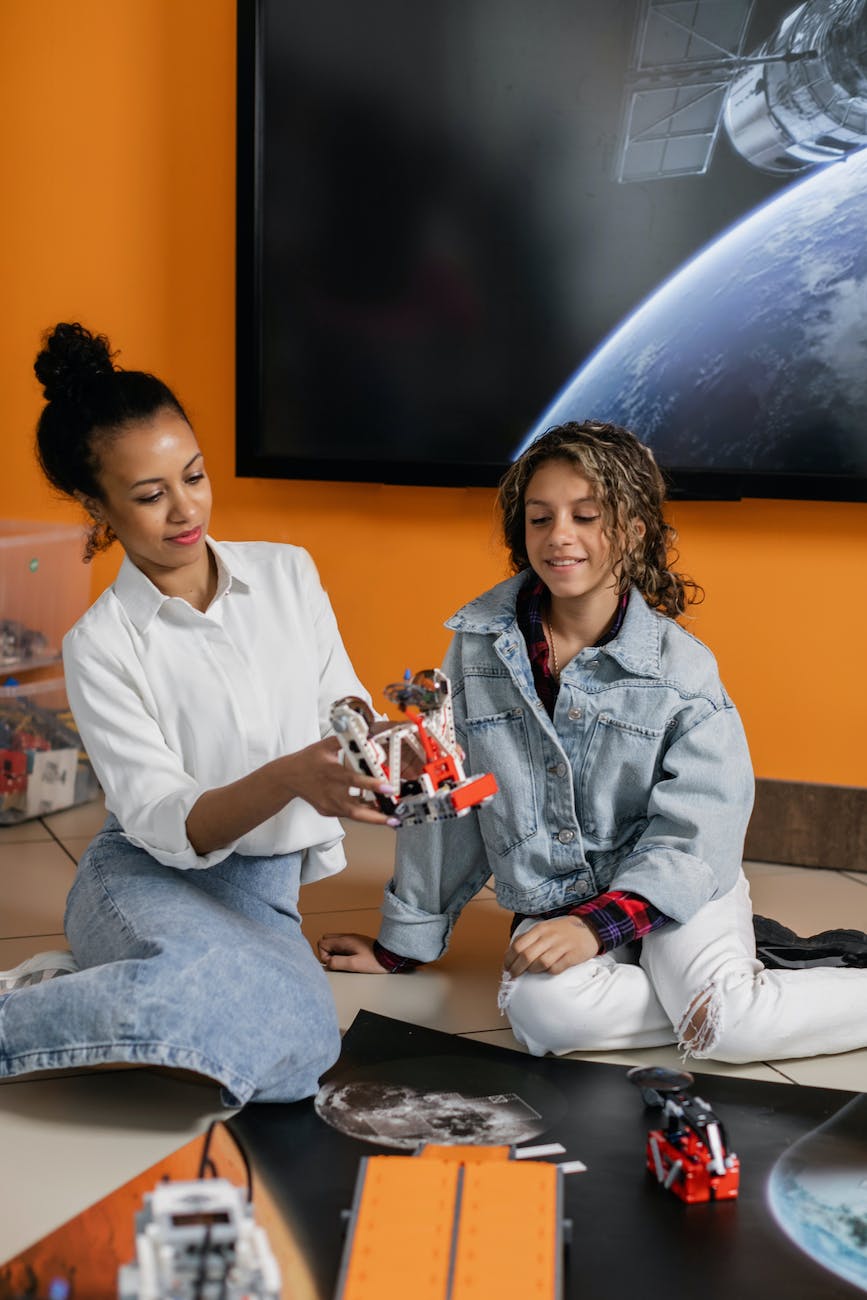
Akyol et al. discuss that 3D printers have been sent to the international space station to increase the capabilities of astronauts (2022). 3D technology could provide building components and replacement parts on the Moon, or Mars, for critical systems. The inventory and weight of spare parts would not be practical to transport those distances. Making parts as needed would be a weight savings.
Construction and architecture are other areas where 3D technologies can multiply capabilities. Where equipment or materials are too expensive to transport to remote areas, 3D-printed parts can be used instead. Apart from computer modeling for architecture and engineering, 3D printing technology is used to manufacture housing from concrete and natural materials. Li et al. discuss the cutting edge materials used by 3D printers to create items (2023). Referred to as biomass, printers are making items out of organic materials instead of plastic. From benefits for biodegradability to medical applications where biocompatibility is an advantage, biomass is the future of drug development and wound treatment.
In chemistry, according to Akyol et al., 3D printing is perfect for making models of molecules and extended solids (2022). Students around the world can also print out their course materials where they may not be available or in limited supply. Organic chemistry and biology are two fields of research where 3D printing is valuable.
Drexel University has a lab where the students make materials and accessories for the fashion industry. More than buttons and buckles, fabrics are being designed and prototyped with 3D technology.
We need dreamers and students with imagination and technical literacies capable of building the future. 3D printing is a powerful piece of technology available to use in schools. In addition to its ability to produce almost any model to support learning, 3D technologies have a high degree of engagement for all stakeholders. This engagement is a benefit to promote participation in STEM classes and acts as a springboard for students wanting to pursue STEM careers. Innovation is the pursuit of improving the quality of human life. 3D technologies will be the window that learners will view the future through.
Akyol, C., Uygur, M., & Yelken, T. Y. (2022). The use of 3D design programs and 3D printers in the education of the gifted and the opinions of students and teachers. Journal for the Education of Gifted Young Scientists, 10(2), 173–205. https://doi.org/10.17478/jegys.1105484




 Marcus Szeiman